
Knee pain affects people of every age, from athletes pushing through intense training to older adults managing everyday stiffness. As more people search for simple, non-invasive ways to ease discomfort, one product keeps coming up in conversations: the knee pain relief belt. Brands like Arthagone™ have made these supports popular by combining compression, stability, and comfort in a single wearable design. Before buying one, though, most people have a long list of questions about how these belts actually work, who benefits from them, and what to expect once they start using one regularly.
This article answers the most common questions people ask, so you can make an informed decision and use your support correctly.
Key Takeaways
A knee pain relief belt applies gentle compression and support to reduce strain on the joint during movement.
These belts work well for arthritis, ligament strain, post-workout soreness, and general joint instability.
Proper sizing and correct placement determine how effective the belt feels during daily activities.
Most people can wear a support belt for several hours at a time, though extended non-stop use isn't recommended.
A knee pain relief belt supports recovery but doesn't replace medical evaluation for severe or persistent pain.
Understanding these basics helps explain why a knee pain relief belt has become a go-to solution for people managing joint discomfort at home, at work, or during exercise.
What Exactly Is a Knee Pain Relief Belt?
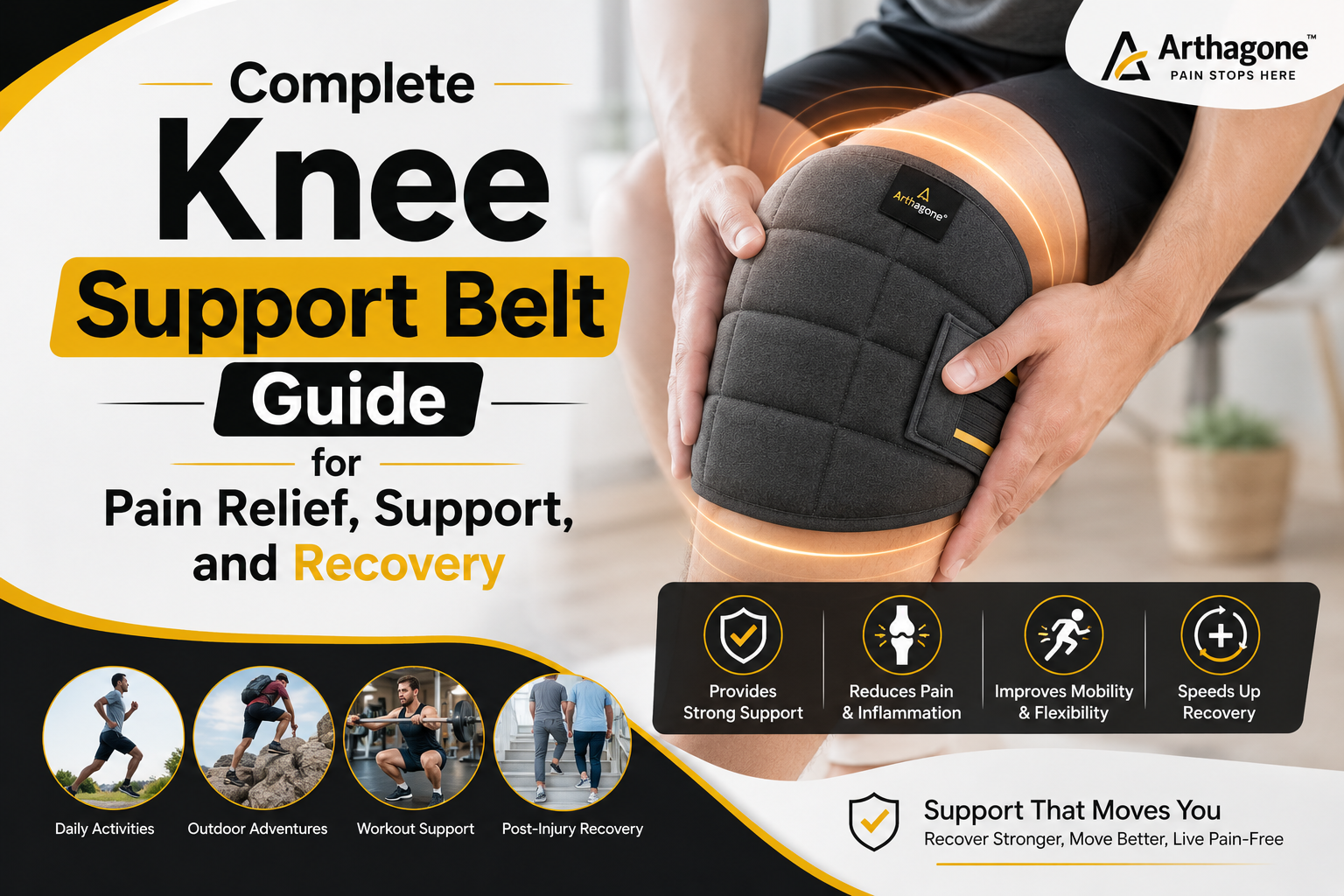
A knee pain relief belt is a wearable support device designed to wrap around the knee joint and apply steady, adjustable pressure. Manufacturers construct these belts from breathable, flexible materials such as neoprene, elastic fabric blends, or compression mesh. The design typically includes an adjustable strap system that lets the wearer control tightness based on their comfort level and activity type.
Unlike bulky knee braces used after surgery, these belts focus on light-to-moderate support. They stabilize the kneecap, reduce pressure on surrounding tendons, and improve blood circulation around the joint. People use them during walking, standing for long periods, climbing stairs, or engaging in low-impact exercise.
How Does a Knee Pain Relief Belt Actually Work?
The mechanism behind these belts relies on three principles: compression, stabilization, and warmth retention.
Compression narrows the space around swollen tissue, which can reduce inflammation and improve circulation. Stabilization keeps the kneecap aligned during movement, preventing the small shifts that often trigger sharp pain. Warmth retention increases blood flow to the area, which helps loosen stiff muscles and ligaments before activity.
Together, these three effects reduce the load placed on the joint itself. Instead of the knee absorbing every bit of impact from walking or standing, the belt redistributes some of that pressure across a wider surface area.
Who Should Consider Using One?
Not everyone experiences knee pain for the same reason, so the ideal candidate list is fairly broad. People commonly turn to a support belt if they experience:
Osteoarthritis or general joint stiffness
Minor ligament strain from sports or overuse
Post-exercise soreness that lingers for days
Occupational strain from standing, kneeling, or squatting repeatedly
General instability after a mild injury
Office workers who sit for long hours sometimes use these belts too, since prolonged sitting can weaken the muscles supporting the knee joint over time. Athletes often wear them as a preventive measure, especially during high-repetition activities like running or cycling.

Does It Help With Arthritis Pain Specifically?
Yes, compression-based support is one of the most commonly recommended non-medical approaches for arthritis discomfort. Many people with osteoarthritis report that wearing a supportive belt reduces the sensation of grinding or looseness in the joint. While it doesn't reverse cartilage wear, it can make daily movement noticeably more comfortable by limiting excess motion that aggravates already-inflamed tissue.
How Tight Should the Belt Be?
This is one of the most frequently asked questions, and for good reason: an improperly fitted belt can do more harm than good. The general rule is snug but not restrictive. You should be able to slide one or two fingers underneath the strap comfortably. If your toes tingle, your skin changes color, or you feel numbness, the belt is too tight and needs to be loosened immediately.
Correct tension keeps the knee stable without cutting off circulation, which is the entire point of a well-designed knee pain relief belt.
How Long Can You Wear It Each Day?
Most manufacturers, including Arthagone™, recommend wearing the belt for a few hours at a stretch rather than continuously throughout the day. Extended, non-stop wear can weaken surrounding muscles over time, since the joint relies less on its own stabilizing tissue when a belt is doing part of the work. A common approach is wearing it during activity — walking, exercising, standing for long periods — and removing it during rest.
Can It Replace a Doctor's Visit?
No. A support belt manages symptoms and adds stability, but it doesn't diagnose or treat underlying conditions like torn ligaments, meniscus damage, or advanced arthritis. If pain persists beyond a few weeks, worsens suddenly, or comes with swelling, redness, or reduced range of motion, seeing a healthcare provider remains essential. A knee pain relief belt works best as a supportive tool alongside proper medical guidance, not as a standalone fix for serious injuries.
What Should You Look for When Buying One?
Quality varies significantly between brands, so a few features are worth checking before purchase:
Breathable, skin-friendly fabric that won't irritate the skin during long wear
Adjustable straps for a customizable, secure fit
Reinforced stitching that holds up under repeated movement
A design that stays in place during activity instead of sliding down
Reading verified customer reviews and checking sizing charts carefully both help avoid the common mistake of ordering a belt that's too loose or too tight.
Choosing the right knee pain relief belt comes down to understanding your specific pain triggers, your activity level, and how much support you actually need throughout the day. Brands like Arthagone™ design their belts with adjustable compression and breathable materials specifically to address these common concerns, making it easier to find a fit that supports real movement rather than restricting it. If joint discomfort has been slowing you down, exploring a well-fitted support belt is a practical next step worth taking.

Write a comment ...